

For the last year, many developers got used to a simple idea: pay a flat monthly fee and get access to a powerful state-of-the-art (SOTA) coding agent. That model now looks much less stable.
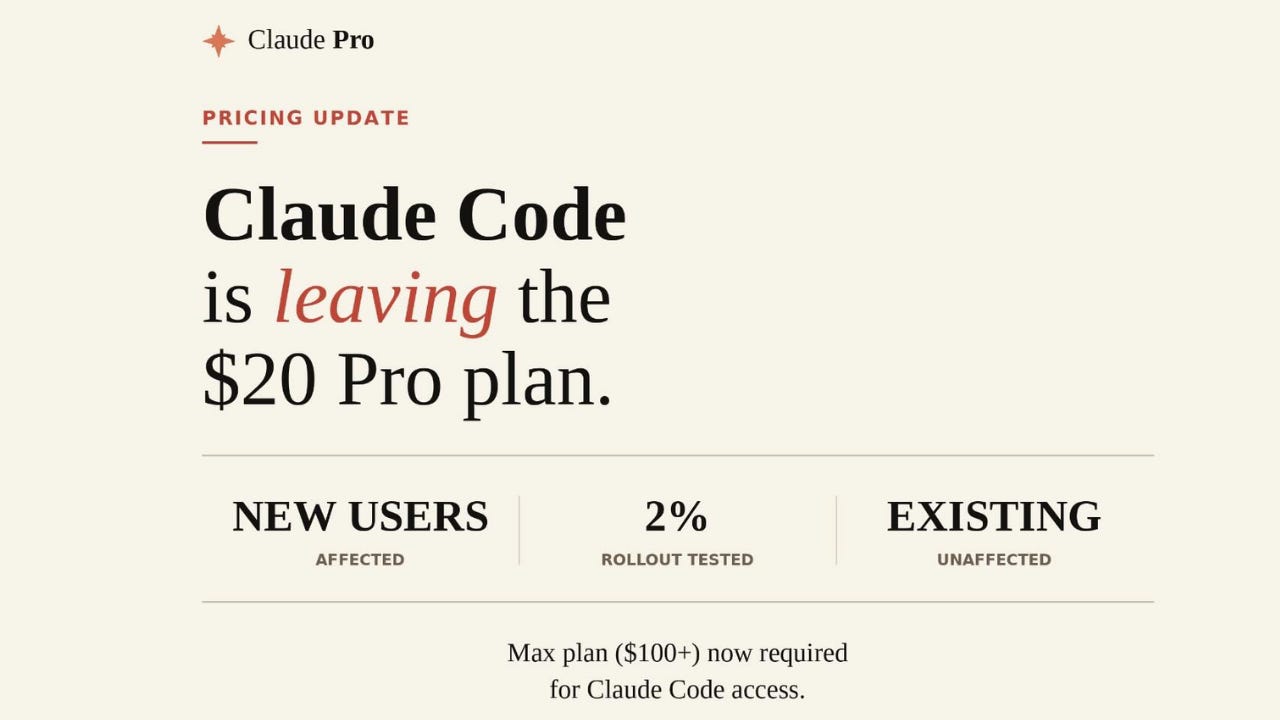
Anthropic sparked backlash this week after briefly testing a version of its signup flow in which some new users no longer saw Claude Code included in the $20/month Pro plan. Reporting indicates the experiment affected roughly 2% of new users, and Anthropic later clarified that existing users were not affected. Still, even a small test was enough to trigger a much larger conversation about where AI coding pricing is headed next.
Get All My 8 Books, One Button Away With 60% Off

I have created a bundle for my books and roadmaps, so you can buy everything with just one button and for 40% less than the original price. The bundle features 8 eBooks, including:
What happened, and why did the AI community react so strongly?
The reason developers reacted immediately is simple: the pricing jump is not minor. Anthropic’s current pricing page lists Pro at $20/month and says it includes Claude Code, while Max starts at $100/month.
Anthropic’s Max plan page also markets Max as the tier that combines Claude apps with Claude Code and offers up to 20x more usage per session than Pro. In other words, even if the company has not officially removed Claude Code from Pro, it has already built the product and pricing structure needed to move heavier coding usage upmarket.
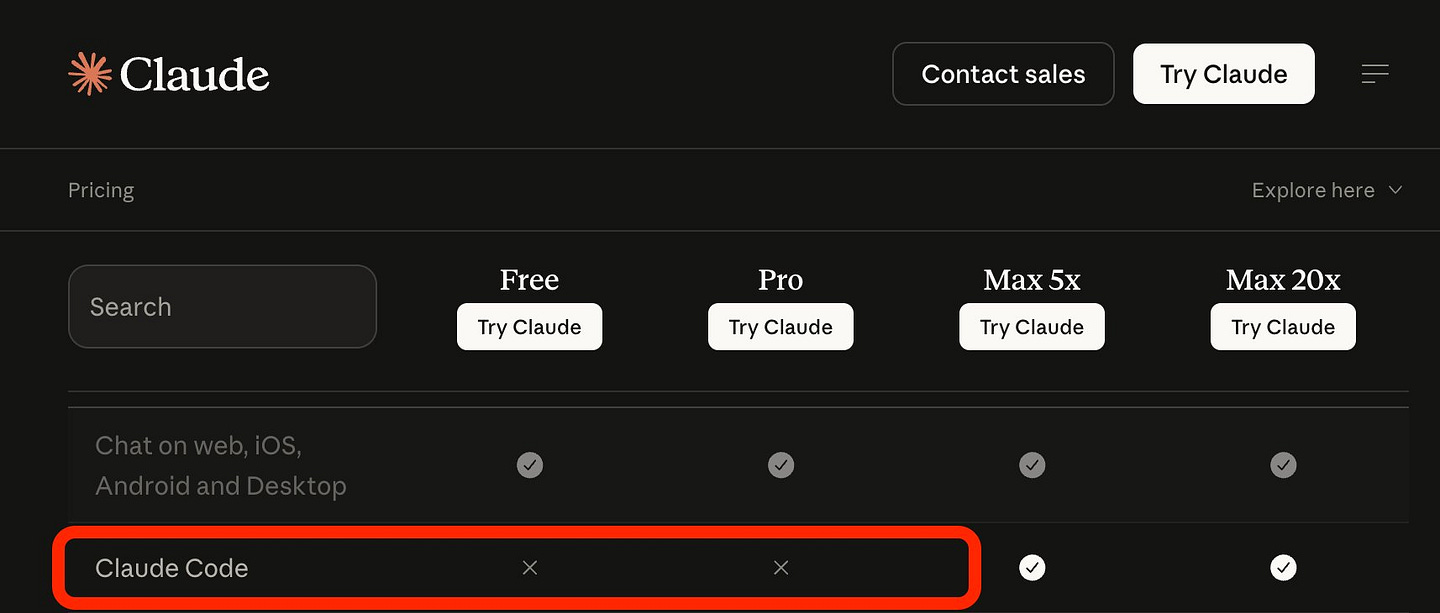
That matters because Claude Code is not a lightweight chat feature. It is an agentic coding product that can inspect repositories, run commands, edit files, and increasingly support long-running workflows.
As these systems become more capable, they also become more expensive to serve. Anthropic has already tightened some usage rules during peak periods, which suggests the company is under real pressure to balance demand, performance, and subscription economics.
So even if this specific test is rolled back, the strategic direction is hard to miss: advanced coding workflows are becoming expensive enough that providers may no longer want to bundle them cheaply for everyone.
Why does this matter beyond Anthropic?
The bigger story is not just about Claude’s code. It is about the business model for AI coding tools. Flat-rate subscriptions worked well when most users were doing short chats, moderate code generation, or occasional debugging.
They become much harder to sustain when users start running multi-hour agents, background coding tasks, deep repository analysis, and repeated tool calls inside large contexts. Those are much more compute-intensive behaviors, and they are exactly the behaviors that frontier AI labs now want to encourage as their products become more capable.
That is why Anthropic’s experiment should be read as an industry signal, not just a single-company mistake. OpenAI’s current ChatGPT Pro tier starts at $100/month and includes “maximum Codex tasks,” showing that premium coding access is already being separated from lower-cost consumer plans. The labels differ, but the direction is similar: the most serious developer workflows are moving into higher-priced subscription bands.
Once one company proves that a segment of power users will pay for that access, others have a strong incentive to follow. That does not necessarily mean every coding feature will be paywalled at $100, but it does mean the era of generous, low-cost, all-in-one coding subscriptions may be ending.
The alternative models are real, but they may not stay cheap forever
This is also why open and lower-cost challengers matter more than ever.
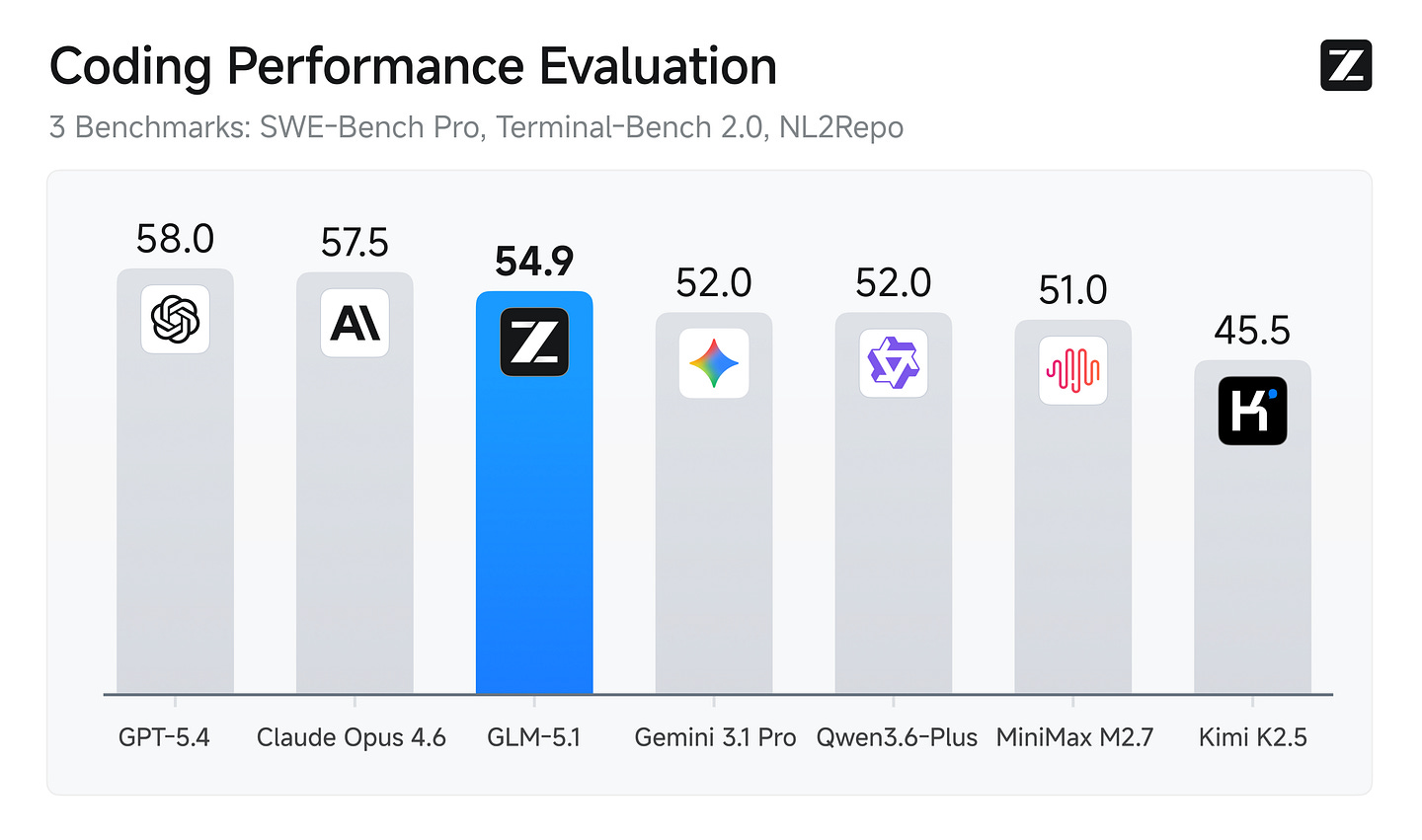
Zhipu’s GLM-5.1 is being positioned as a serious coding model, with official documentation claiming a 58.4 score on SWE-Bench Pro. Reuters also reported that Zhipu raised prices for its coding plan by at least 30% in February due to surging demand. That combination is important: strong performance can create real pressure on incumbents, but rising usage can also push alternative providers toward the same pricing problems.
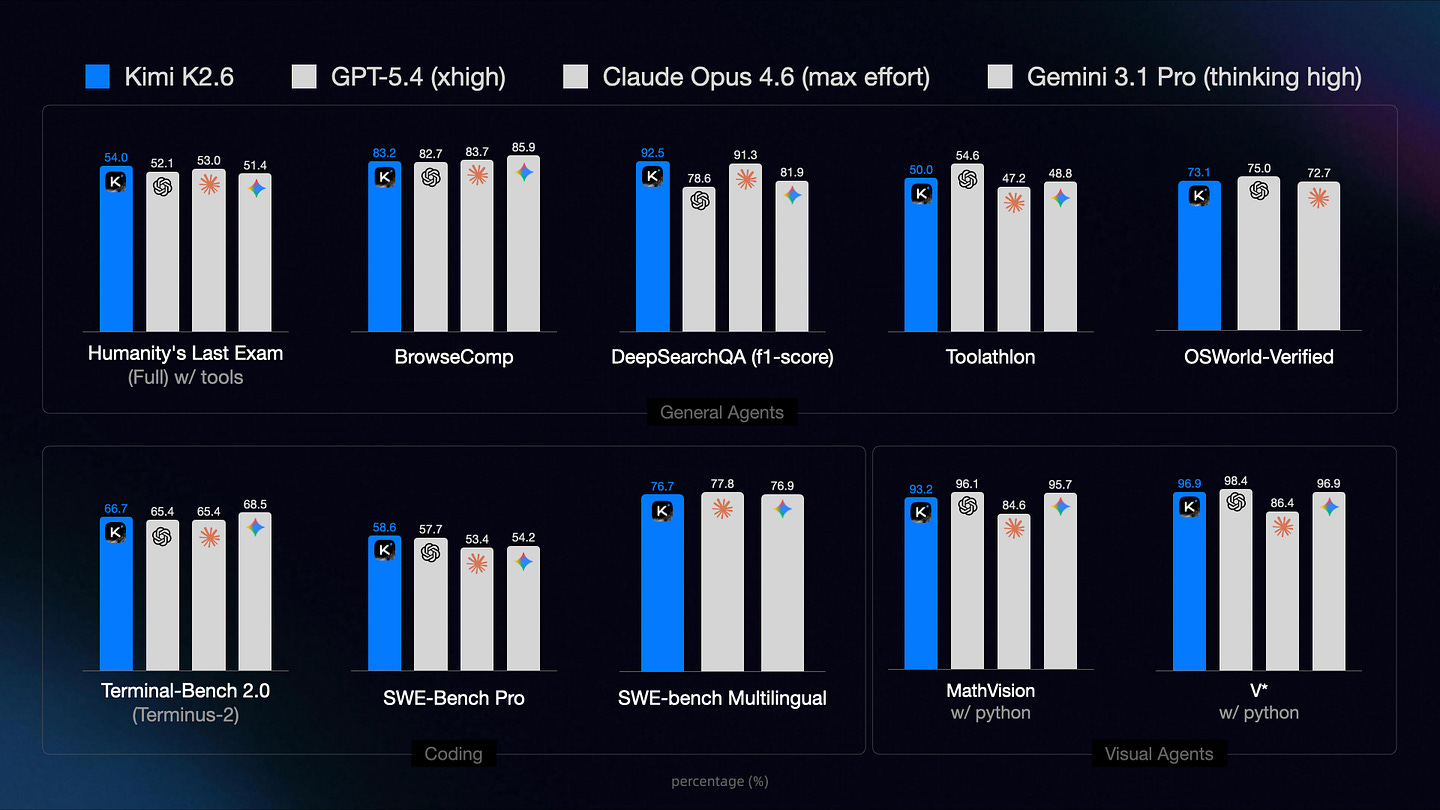
Moonshot’s Kimi K2.6 is another example. Its official materials emphasize stronger long-horizon coding performance, 256K context, and agent-oriented use cases. That makes it part of the same broader trend: high-performing alternatives are appearing, and they are increasingly good enough to be taken seriously by developers who do not want to depend entirely on Anthropic or OpenAI.
My own take is that this is the early shape of a more expensive AI coding market. Anthropic’s small test may not become policy tomorrow, but it exposed the direction the market is moving in. The good news is that credible alternatives now exist, and that competition should slow down the pace of pricing escalation. The bad news is that if usage keeps growing and agentic coding becomes the norm, even today’s affordable alternatives may not stay affordable for long.
References:
Anthropic’s Claude Code pricing pain is Sam Altman’s pleasure
Chinese AI startup Zhipu hikes prices for coding plan as demand rises
Claude is limiting usage more aggressively during peak hours — here’s what changed
If you found this helpful and want to go deeper, I’m running a live workshop:
Building Agent Skills for Claude Code
This is a 1.5-hour hands-on session where we’ll go beyond theory and actually build Skills together — from idea → design → implementation → testing.